What is AI: A practical 2026 field guide
Quick Summary
AI is no longer a futuristic concept but a functional layer of our digital lives. In 2026, the focus has shifted from “what can it do” to “how much time can it save me.” This guide cuts through the marketing hype to explain the core tech and its real-world application.
| Feature | Traditional Software | Modern AI (2026) |
| Logic | If/Then rules | Pattern recognition |
| Output | Predictable/Static | Generative/Adaptive |
| Interface | Buttons and menus | Natural language |
| Learning | Requires manual updates | Self-improving datasets |
What is AI and how it functions today
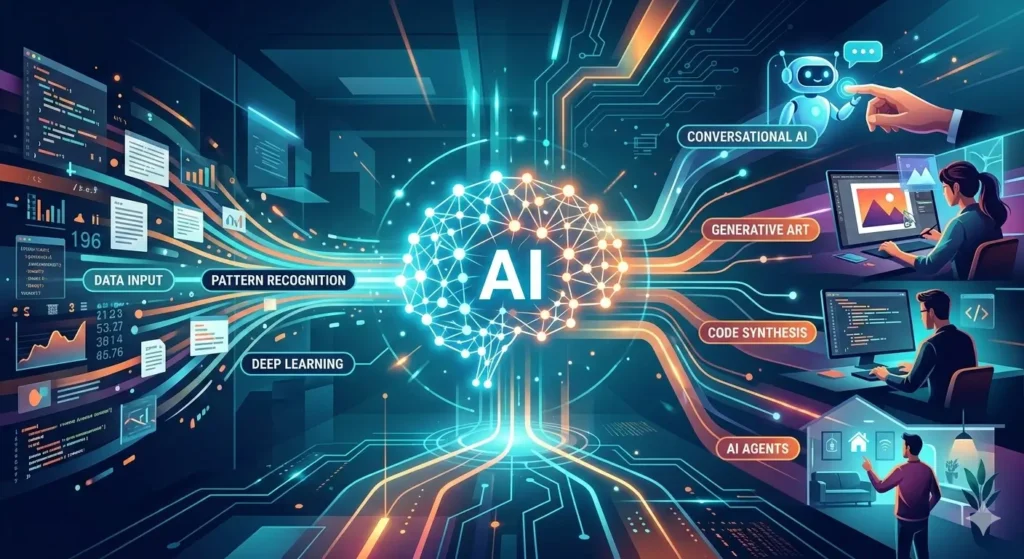
To understand what is AI, you have to stop thinking of it as a “brain” and start seeing it as a highly sophisticated prediction engine. At its core, Artificial Intelligence is a branch of computer science that builds systems capable of performing tasks that usually require human intelligence, such as reasoning, discovering meaning, or generalizing from past experience.
I recently used a local LLM to categorize three years of tax receipts while sitting on a train with spotty Wi-Fi. That is the reality of what is AI in 2026; it is portable, efficient, and surprisingly intuitive. It doesn’t “know” things the way we do; it calculates the statistical probability of the next logical step in a sequence, whether that’s a pixel in an image or a word in a sentence.
The shift from generative to agentic workflows
The conversation around what is AI has evolved significantly over the last year. We have moved past the “chatbot” phase. Today, we interact with “agents”—AI systems that don’t just talk but actually execute multi-step tasks. I’ve personally offloaded my entire meeting scheduling and preliminary research to an agentic layer that lives in my browser.
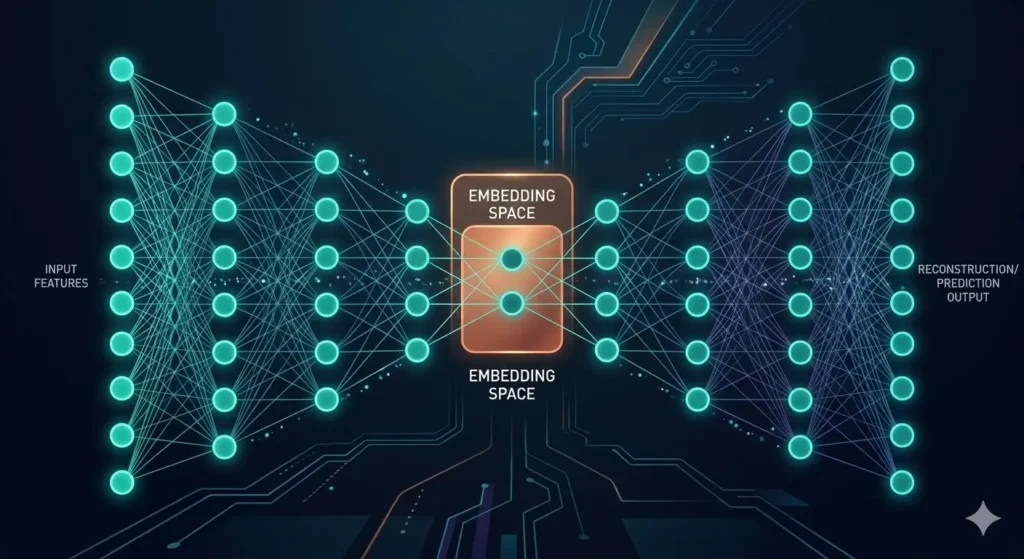
These systems rely on deep learning and neural networks. By mimicking the way human neurons fire, these models can identify subtle correlations in massive datasets that a human analyst would miss. When you ask what is AI in a professional context, you are really asking about competitive advantage through data synthesis.
Why machine learning is the engine of 2026
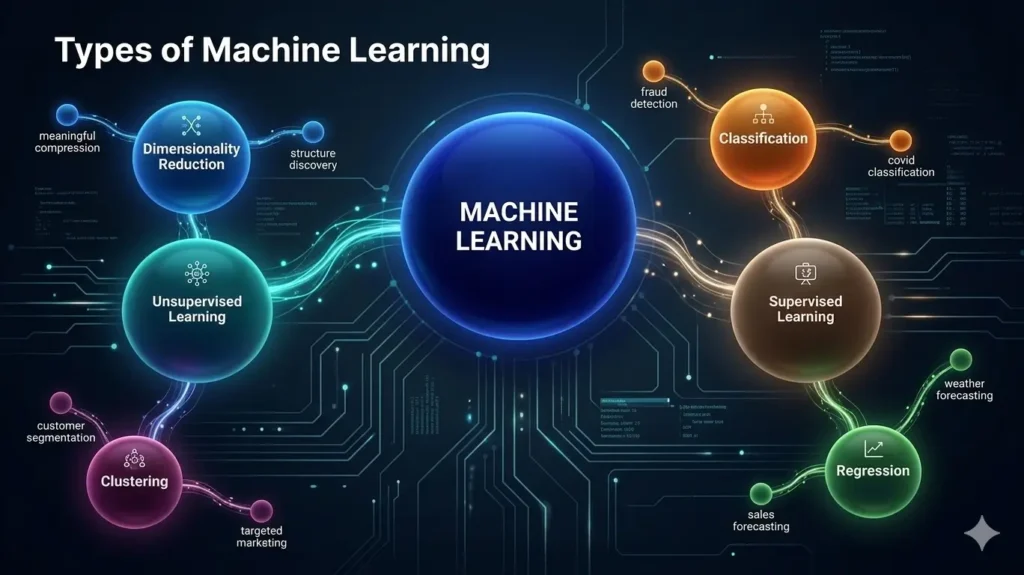
You cannot discuss what is AI without mentioning machine learning (ML). If AI is the vision, ML is the motor. It is the process by which the system trains itself. I noticed that my creative suite now predicts which color palettes I’ll prefer based on my previous three projects—that’s ML in action, quietly refining my workflow without me touching a slider.
The current gold standard involves transformer architectures. These allow the AI to weigh the importance of different parts of the input data differently. This “attention mechanism” is why modern tools can summarize a 50-page PDF in seconds without losing the core context of the third chapter.
Practical applications I use every day
In my daily routine, what is AI translates to about four hours of saved manual labor. For instance, I use vision-based models to transcribe my messy whiteboard sketches into clean, functional Python code. It isn’t perfect, but fixing a few lines of code is much faster than writing 200 from scratch.
- Content Synthesis: Turning long-form videos into actionable bullet points.
- Code Debugging: Identifying logic flaws in real-time.
- Personalized Learning: Explaining complex quantum physics concepts as if I were a five-year-old.
- Predictive Maintenance: My smart home system now alerts me to appliance failures before they happen.
Ethical considerations and the human element
Understanding what is AI also requires acknowledging its limitations. Hallucinations—where the AI confidently states a falsehood—still happen, though less frequently in 2026. I always fact-check critical data points against trusted academic sources before publishing any technical reports.
The goal isn’t to replace the human element but to augment it. I find that AI is a brilliant “first draft” partner. It gets me past the “blank page” syndrome, allowing me to spend my energy on high-level strategy and emotional nuance rather than rote formatting or data entry.
Pro Tip: When using AI for research, always ask the model to “provide its reasoning step-by-step.” This forces the system to follow a logical path, which significantly reduces the chance of errors.
The future of intelligent systems
As we look forward, the definition of what is AI will continue to expand. We are seeing the rise of “Small Language Models” (SLMs) that run entirely on your phone or laptop, ensuring privacy while maintaining high performance. I’ve started moving my more sensitive client data analysis to these local models to ensure 100% data sovereignty.
If you want to stay ahead of these rapid changes and see which tools are actually worth your time, you should join our community. We test the latest models so you don’t have to waste your subscription budget on hype.
Stay updated on the latest AI breakthroughs: Join our WhatsApp Channel to get direct insights and tool reviews every week.

Bruno Canhos Vicentin is a technology specialist and AI enthusiast dedicated to uncovering digital solutions that optimize workflows. With a focus on hands-on testing and unbiased reviews, he helps professionals navigate the rapid evolution of Artificial Intelligence through practical guides and in-depth analysis.