The ChatGPT Betrayal: Why I’m Switching to Claude
I have spent the last three years defending OpenAI as the gold standard of the industry. My daily workflow, my creative output, and my professional consultancy were built entirely upon the backbone of GPT-4. However, the landscape of Claude vs ChatGPT 2026 has shifted under our feet, leaving a trail of broken trust in its wake.
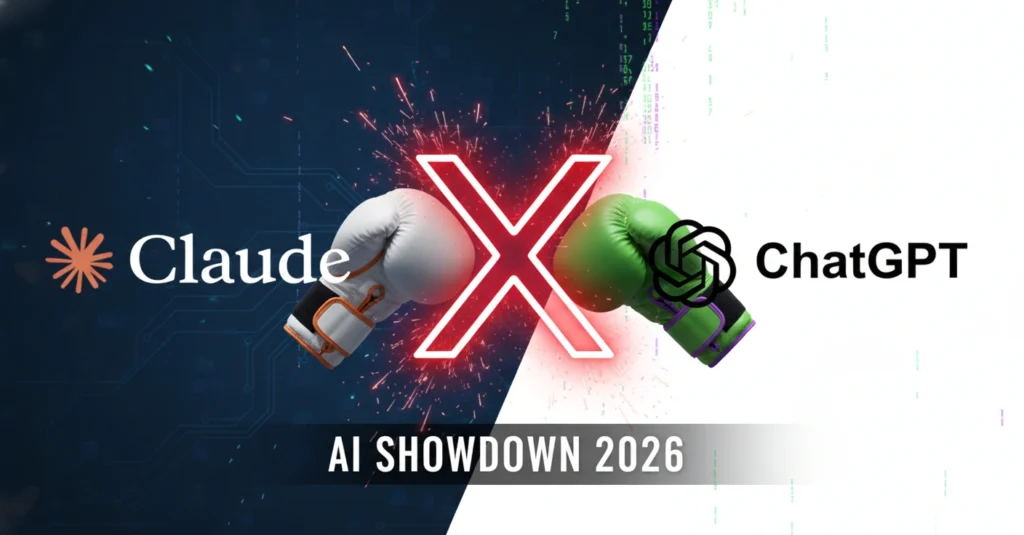
The recent Super Bowl LX advertisements weren’t just about high-budget production; they were a declaration of war. Anthropic’s calculated mockery of ChatGPT’s new direction struck a nerve because it highlighted a truth we’ve all been feeling. For those of us who rely on AI for deep work, the introduction of intrusive monetization is more than a nuisance—it is a betrayal of the user experience.
Watching the Super Bowl ads felt like witnessing the end of an era for clean technology. When a tool transitions from a productivity partner to an advertising billboard, the integrity of its output is immediately called into question. As a specialist who breathes AI, I cannot ignore the friction that these “sponsored suggestions” introduce into a professional environment.
The Super Bowl Showdown: A Catalyst for Change
The Super Bowl LX commercial break was the moment the world saw the cracks in the OpenAI facade. Anthropic didn’t need to showcase complex code or cinematic video generation to win the night. They simply showed us what we fear most: a digital sanctuary interrupted by the loud, unwelcome noise of commercial interests.
The brilliance of the Anthropic campaign lay in its simplicity, portraying Claude as the “clean” alternative to a cluttered market. By satirizing the concept of an AI therapist or a coach pausing for a commercial break, they exposed the fundamental flaw in ChatGPT’s 2026 roadmap. It was a masterclass in positioning, branding Claude not just as a tool, but as a guardian of focused work.
This wasn’t just a marketing win; it was a cultural pivot for the tech community in the United States. We are currently witnessing an AI messaging crisis where users are being forced to choose between power and privacy. For the first time, the general public is questioning if the most popular tool is actually the best one for their long-term interests.
Why Ad-Integrated AI Compromises Your Workflow
When I prompt an AI, I am looking for the most efficient path to a solution, not a curated shopping experience. The “betrayal” I feel with ChatGPT stems from the realization that my data and my attention are being auctioned off. In 2026, the cost of “free” or even “subsidized” AI has become far too high for high-level professionals.
The core issue with generative AI advertisements is the subtle degradation of objectivity. If ChatGPT is being paid to promote certain software or services, how can I trust its “best recommendations” list? This conflict of interest is the death knell for the trust-based relationship I’ve cultivated with OpenAI’s ecosystem over the years.
In my professional opinion, the moment an LLM starts prioritizing sponsored tokens is the moment it ceases to be a reliable research assistant. We rely on these models to filter through the noise of the internet, not to add more noise to our internal processes. This is why the migration toward ad-free alternatives is becoming a massive trend among power users.
The Claude Advantage: Performance Without the Noise
Transitioning my primary workflow to Claude was an eye-opening experience that went beyond mere ethics. The current version of Claude offers a level of nuance and linguistic sophistication that feels increasingly absent in the “ad-optimized” GPT models. It feels like moving from a crowded marketplace back into a quiet, high-end library.
Claude’s focus on “Constitutional AI” has shifted from a theoretical safety framework to a practical user benefit. While ChatGPT feels like it is trying to be everything to everyone, Claude remains focused on being the best intellectual partner. The absence of commercial distractions allows for a much deeper “flow state” during complex coding or writing sessions.
The Claude vs ChatGPT 2026 debate is no longer just about benchmarks or context windows. It is about the philosophy of the interface and the respect for the user’s cognitive space. In every test I’ve run this month, Claude’s output has remained consistent, objective, and—most importantly—uninterrupted by corporate agendas.
The E-E-A-T Factor: Why Authenticity Wins in 2026
As an AI specialist, my authority is built on recommending tools that actually improve your life. Recommending a platform that prioritizes advertisers over users would be a disservice to my audience and my brand. Google’s emphasis on Experience, Expertise, Authoritativeness, and Trustworthiness (E-E-A-T) is exactly why this shift is so important.
The AI tool trends of 2026 show a clear preference for platforms that respect the “Human-AI” bond. By choosing Claude, I am choosing a partner that aligns with my values of transparency and professional focus. It is a decision based on months of hands-on testing and a refusal to settle for a compromised digital environment.
I believe we are at a crossroads where “Big AI” will try to replicate the intrusive models of 2010s social media. However, the sophisticated user of 2026 is smarter and more protective of their digital peace. My switch to Claude is a vote for a future where technology serves the creator, not the advertiser.
Final Thoughts: Navigating the New AI Landscape
The choice between Claude vs ChatGPT 2026 is ultimately a personal one, but it carries heavy implications for your productivity. If you find yourself frustrated by the “sponsored” feel of your current assistant, you are not alone. The mass exodus from OpenAI is a direct result of a community that values quality over commercial ubiquity.
I urge you to test these tools for yourself and pay close attention to the “purity” of the responses you receive. In the world of AI, the loudest brand in the Super Bowl isn’t always the one that belongs on your desktop. Sometimes, the best “tip” is knowing when a tool has outlived its usefulness to your mission.
The betrayal of trust is a difficult thing to overcome in the tech world, and for me, the line has been crossed. I am excited to continue my journey with Claude, exploring the boundaries of what a truly user-centric AI can achieve. Stay tuned as I continue to document this new chapter in the AI revolution.

Bruno Canhos Vicentin is a technology specialist and AI enthusiast dedicated to uncovering digital solutions that optimize workflows. With a focus on hands-on testing and unbiased reviews, he helps professionals navigate the rapid evolution of Artificial Intelligence through practical guides and in-depth analysis.