What is Vibe Coding? The 2026 Trend Changing How We Build Apps
If you’ve been following the latest shifts in artificial intelligence, you’ve likely heard a new term: Vibe Coding. But what does it actually mean, and why is it becoming the preferred way for creators to build software in 2026?
In this guide, we’ll break down this movement and show you por que your vision is now more important than your knowledge of Python.
Understanding What is Vibe Coding in 2026
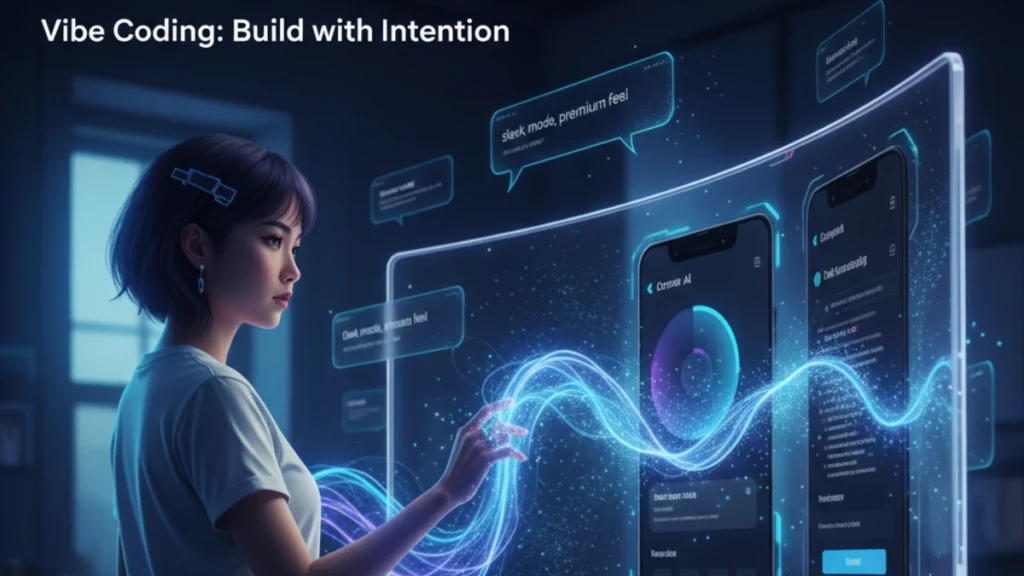
At its core, What is Vibe Coding can be explained as a style of software development where the creator focuses on describing the “feel” of an application, leaving the technical execution to AI agents.
Unlike traditional programming, this approach doesn’t require you to worry about syntax. You provide the vision, and tools like Cursor handle the heavy lifting.
Why What is Vibe Coding is Trending for Creators
The shift happened because LLMs reached a tipping point. Today, you just tell the AI: “I want a sleek, minimalist dashboard,” and it builds the entire stack. This is similar to what we see in video creation; for instance, once you learn how to use Kling AI, you realize that describing the “mood” is more effective than technical tweaking.
Key characteristics of this development style:
- Natural Language: Building apps is now done in plain English.
- Rapid Iteration: You collaborate with the AI in real-time.
- No Barriers: It allows designers to become developers overnight.
Creative Power vs. Traditional Programming
While this method is perfect for apps and front-end experiences, deep system architecture still requires human oversight. However, for most creators, focusing on the “vibe” is faster and more intuitive.
Conclusion
Understanding this shift is essential for the 2026 creator economy. It represents the ultimate democratization of technology: if you can describe it, you can build it.

Bruno Canhos Vicentin is a technology specialist and AI enthusiast dedicated to uncovering digital solutions that optimize workflows. With a focus on hands-on testing and unbiased reviews, he helps professionals navigate the rapid evolution of Artificial Intelligence through practical guides and in-depth analysis.